
The claw hammer is one of the most recognizable tools in the world. It’s a staple in every toolbox, from the professional construction site to the home DIY drawer. But how much do you really know about claw hammers? This simple tool has a surprising amount of depth in its design, materials, and application. Choosing the right one can make a world of difference in your efficiency, safety, and the quality of your work.
As Allen, representing a factory in China with seven production lines dedicated to crafting high-quality hammers and axes, I've seen millions of these tools come to life. We export to discerning markets like the USA, Europe, and Australia, working closely with business owners like Mark Thompson who demand both quality and value. This guide is more than just a list of facts; it's an inside look from a manufacturer's perspective. We'll explore everything from the fundamental anatomy of a hammer to the subtle design choices that separate a great hammer from a mediocre one. By the end, you'll be able to select the perfect claw hammer with confidence.
What Exactly is a Claw Hammer?
At its core, a claw hammer is a tool designed for two primary functions: driving nails and extracting them. Its head is ingeniously crafted to serve both purposes. At one end, you have the face—a flat, solid surface used to pound nails into materials like wood. On the opposite end is the distinctive claw, which is split to create a V-shape. This claw is the tool’s secret weapon, allowing you to grip a nail head and pull it free.
The anatomy of the hammer head is simple yet crucial. The main body is the head itself, typically made of forged steel. The part of the head that strikes the nail is the "face." The sides of the head are called the "cheek," and the section connecting the head to the handle is the "neck." The quality of each component, from the hardening of the steel head to how securely the handle attaches, determines the tool's overall performance and lifespan. A well-balanced hammer feels like an extension of your arm, providing power and control without causing undue fatigue.
The design is a masterclass in functional simplicity. It's a tool that has remained largely unchanged for centuries, precisely because it performs its job so effectively. Whether it's a simple picture frame or a complex construction project, the reliable claw hammer is almost always involved.
How is a Claw Hammer Used for More Than Just Nails?
While the name suggests a focus on nails, the utility of a claw hammer extends far beyond that. The claw is an excellent tool for prying and light demolition. Have a piece of trim that needs to be removed? Gently work the claw behind it and pry it loose. Need to break down a small wooden crate? A hammer can make short work of it. The solid head can be used to tap things into place, adjust parts, or break apart materials like drywall or plaster in a renovation project.
The versatility of this tool is a key reason for its popularity. In our factory, we often hear from clients who are equipping teams for various jobs; they need a single, reliable tool that can handle multiple tasks. The claw hammer used in this way saves time and reduces the number of tools a worker needs to carry. The hardened steel face isn't just for nails; it can be used to strike chisels or shape soft metals. Of course, it's vital to use the right hammer for the job and always wear safety glasses, as striking hardened surfaces can cause chipping. But for general-purpose work, the claw hammer is a true multi-tasker.
Are All Claw Hammers the Same? Exploring the Main Types
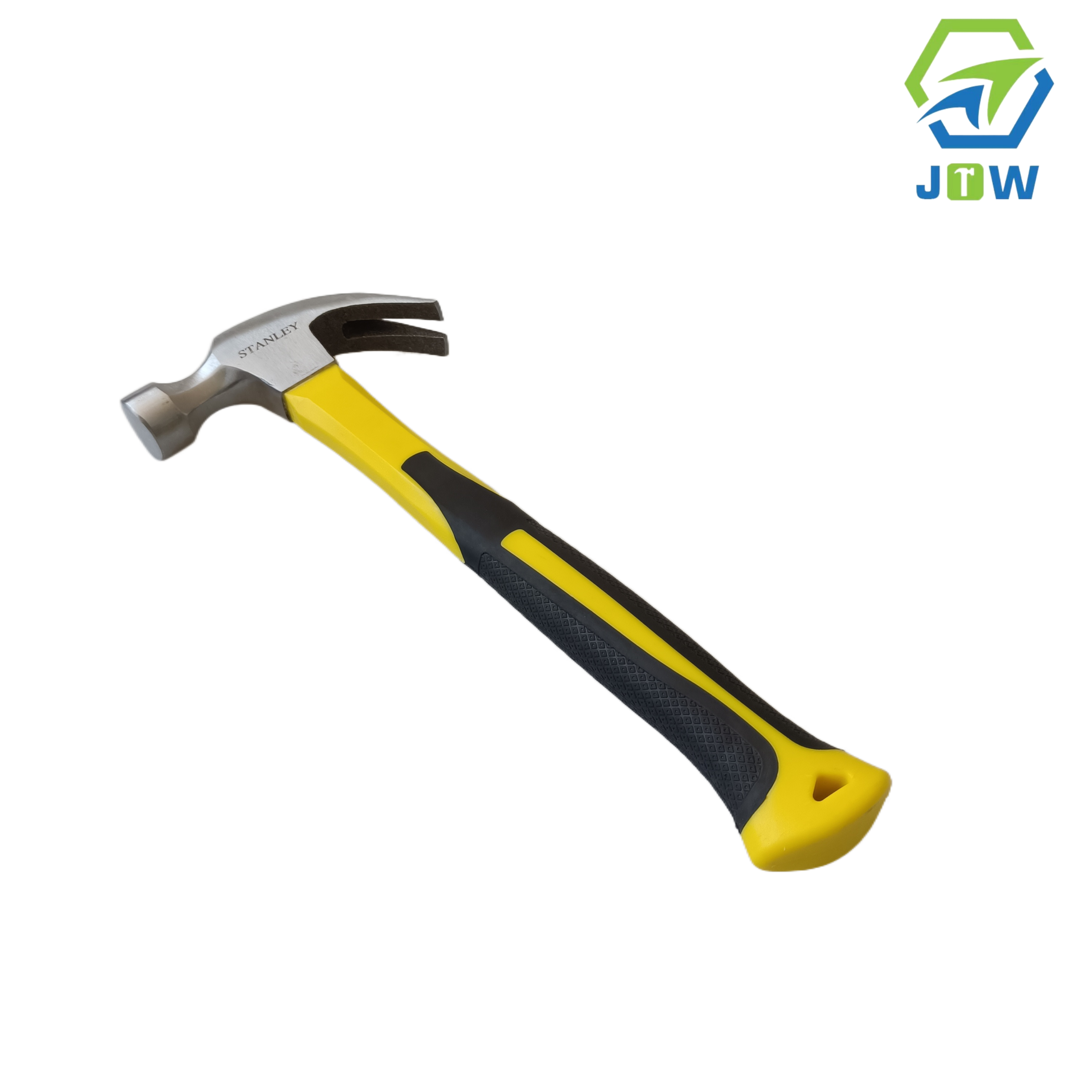
On the surface, most claw hammers look similar, but there are important distinctions that cater to different tasks. The primary variation is between a light-duty utility hammer and a heavy-duty framing hammer. The utility or general-purpose claw hammer is what most people picture. It typically weighs around 16 ounces and is designed for everyday tasks around the house or for light carpentry. It’s perfect for driving and pulling finishing nails without damaging the surrounding surface.
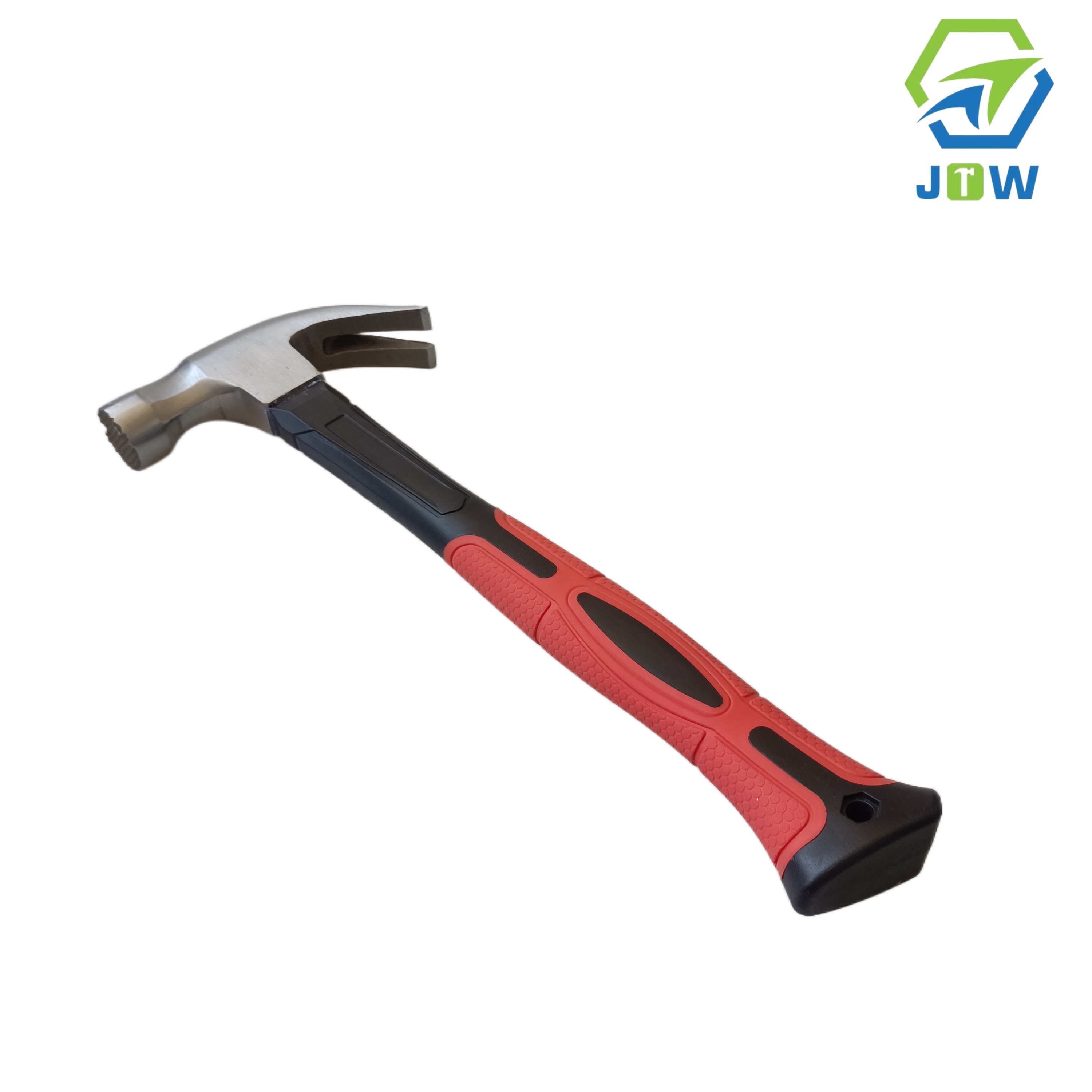
In contrast, the framing hammer is a bigger, more powerful beast. Weighing in at 20 ounces or more, this heavy-duty hammer is built for construction and framing work where driving large nails quickly is the priority. These hammers often feature a "milled" or "waffle" face, which is a textured pattern that grips the nail head to prevent slipping. This texturing, however, will mar the wood surface, making it unsuitable for finishing work. Understanding these types of claw hammers is the first step in choosing the right tool for your specific needs.
The Great Debate: Should You Choose a Curved Claw or a Straight Claw Hammer?
The shape of the claw is a major point of division and the most significant design choice you'll make. Every claw hammer has one of two types of claws: curved or straight. The decision between a straight or curved claw isn't about which is better overall, but which is better for the specific job you need to do. It’s the classic case of function dictating form.
A curved claw is designed to provide maximum leverage when pulling nails. The arc of the curve acts as a rocker, making it easier to extract a stubborn nail with minimal effort. This is the most common type and is ideal for general repair, woodworking, and most DIY tasks. A straight claw, often called a "rip claw," is built for a different purpose. Its design is less about pulling a nail and more about getting into tight spaces to pry things apart. It’s the preferred choice for framing, renovation, and demolition, where it can be used to rip up floorboards, separate wall studs, and tear down materials. The choice really depends on the task at hand.
Curved Claw vs. Straight Claw: A Quick Comparison
| Feature | Curved Claw Hammer | Straight Claw (Rip) Hammer |
|---|---|---|
| Primary Use | General carpentry, finishing, DIY | Framing, demolition, prying |
| Main Advantage | Excellent leverage for pulling nails | Ripping materials, getting into tight spaces |
| Claw Shape | Pronounced curve for rocking motion | Flat, fork-like design |
| Ideal User | Homeowner, finish carpenter | Framer, construction worker, remodeler |
What Makes a Curved Claw Hammer Ideal for General Use?
The genius of the curved claw hammer lies in its physics. The distinct curve of the claw is engineered to provide the best possible mechanical advantage for removing nails. When you slide the claw under a nail head and rock the hammer back, the rounded shape acts as a fulcrum. This concentrates your effort and allows you to pull out even deeply embedded nails with surprising ease. This is why it's the go-to tool for tasks where precision and clean nail removal are important.
For any homeowner or professional doing finish work, the curved claw is indispensable. It's the perfect tool for hanging pictures, assembling furniture, and other DIY projects. The design prioritizes the careful extraction of a nail over brute force. When you're working with finished wood surfaces, the last thing you want is to damage the material while trying to correct a mistake. The rocking motion of the curved claw hammer helps protect the surface while efficiently completing the task of prying nails. For all-around utility, this type of hammer is unmatched.
Why Do Professionals Prefer a Straight Claw for Demolition?
When the job shifts from creation to deconstruction, professionals overwhelmingly reach for a straight claw hammer. The straight, almost fork-like design of the claw is not optimized for the rocking motion needed to pull a nail. Instead, it excels as a wedge and a lever. The pointed tips can be driven into tight spaces between boards or under flooring, allowing the user to pry apart materials with immense force. It's an essential tool for framing, where boards are often adjusted or separated.
During demolition, the straight claw truly shines. It can be used to rip through drywall, punch holes for access, and tear apart old structures. Think of it less as a nail-puller and more as a small, precise pry bar attached to a hammer. This functionality makes it a favorite in the construction and renovation industries. While claw hammers can pull nails regardless of their shape, the straight claw sacrifices some of that finesse for raw, versatile power, making it the champion of heavy-duty work. We supply many construction firms who order our integrated square head right angle claw hammer, a perfect example of a modern, durable straight claw design.
What Materials Should You Look for in a High-Quality Hammer?
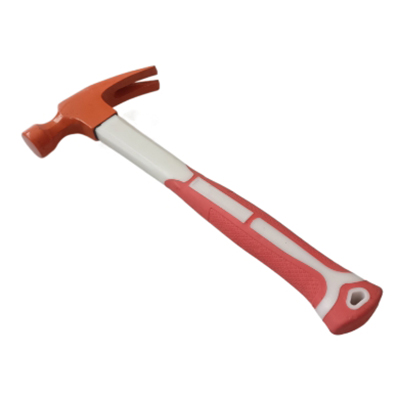
As a manufacturer, I can tell you that the materials used in a hammer are the foundation of its quality. The head should be made from high-carbon, drop-forged steel. This process aligns the grain structure of the steel, making it incredibly strong and resistant to chipping or deforming. Some high-end hammers use titanium, which is much more lightweight than steel but delivers a similar impact force and provides superior vibration dampening, though it comes at a premium price.
Handle material is just as critical.
- Wood Handles: Traditional and effective. Hickory is the gold standard because its long grain structure is strong yet flexible, naturally absorbing shock. Ash is another good option. Wood handles provide a comfortable, classic feel.
- Fiberglass Handles: A modern alternative that is extremely durable and resistant to weather and splintering. Fiberglass is excellent at absorbing vibrations, reducing user fatigue. They are often fitted with a non-slip rubber grip for enhanced control.
- Steel Handles: Often forged as a single piece with the head, these are the most durable option available. They are virtually unbreakable. To counter the increased vibration, they are almost always outfitted with an ergonomic, shock-absorbing grip. Many of our most popular models, such as our range of claw hammers with soft TPR grips, feature this modern design for maximum comfort and durability.
How Does Hammer Weight Affect Your Work?
The weight of a hammer, measured by its head, directly impacts its performance. It's a balance between power and fatigue. A heavier hammer (20-28 ounces) carries more momentum, allowing you to drive nails with fewer, more powerful swings. This is ideal for framing, where speed and efficiency are key. However, swinging a heavy hammer all day is tiring, and you’ll actually expend more energy over time.
A lightweight hammer (12-16-ounce) offers greater control and is less fatiguing to use for extended periods. This makes it perfect for detail work, smaller nails, and general-purpose tasks where precision is more important than raw power. The popular 16-ounce hammer is considered the best all-around weight for most users. When selecting a weight, consider the following: What is the primary task? How long will you be using the tool? A lighter hammer might take one extra swing to drive a nail, but it could save your arm from soreness at the end of the day.
What Key Features Define a Superior Claw Hammer?
Beyond the basics of weight and material, several other claw hammer features elevate a good tool to a great one. A key feature is the face of the hammer. A smooth face is standard for general use as it won't mar the surface of the wood. A milled or "waffle" face, as mentioned earlier, is for framing and prevents the hammer from slipping off the nail head. Another critical element is balance. A well-balanced hammer feels comfortable in the hand and allows for a smooth, accurate swing.
Modern hammers often incorporate advanced features like anti-vibration technology. This can include an elongated neck or special materials within the handle designed to absorb the shock of impact before it reaches your hand. The grip is also crucial; an ergonomic handle with a non-slip rubber grip ensures safety and comfort. Some hammers even feature a magnetic nail starter—a small groove with a magnet in the head that holds a nail in place, allowing you to start it with one hand in hard-to-reach places. These thoughtful details are what we focus on in our production lines to create tools that are not just effective, but a pleasure to use.
Choosing the Right Claw Hammer for Your Business: A Buyer's Guide
For a business owner like Mark Thompson, purchasing tools is about more than just finding the lowest price. It's about securing reliable, high-quality products that will satisfy his customers and reflect well on his business. When sourcing hammers, especially from overseas, there are several key concerns. First and foremost is quality. It's essential to partner with a reputable hammer and ax factory that has a proven track record.
Ask potential suppliers about their quality control processes. How do they test the hardness of their steel? What are their handle durability standards? Don't be afraid to request samples for your own inspection. Secondly, inquire about certifications. Do their products meet international safety standards like ANSI (American National Standards Institute) or GS (Geprüfte Sicherheit) in Europe? A trustworthy supplier will readily provide this documentation. Addressing logistics and payment methods upfront is also crucial for a smooth transaction.
Finally, communication is key. Pain points like shipment delays and poor communication can disrupt your entire sales season. Partner with a supplier who is responsive, transparent, and experienced in international trade. As a factory with extensive experience exporting globally, we understand these challenges and pride ourselves on being a reliable partner. Building a strong relationship with your supplier is the best way to ensure you consistently receive a product that meets your high standards.
Key Takeaways
- Dual Function: A claw hammer is designed to both drive and pull nails, making it an incredibly versatile tool.
- Claw Type Matters: Choose a curved claw for general use and excellent leverage when pulling nails. Opt for a straight claw for demolition, framing, and prying materials apart.
- Materials Define Quality: Look for a hammer with a head made of drop-forged steel and a handle of hickory, fiberglass, or one-piece steel with a shock-absorbing grip.
- Weight Affects Performance: A 16-ounce hammer is a great all-rounder. Heavier hammers (20+ oz) are for framing and heavy-duty tasks, while lighter ones offer more control.
- Find a Reliable Supplier: For business purchasing, prioritize suppliers who can demonstrate consistent quality, provide safety certifications, and maintain clear and efficient communication.
Post time: 09-10-2025